
Proof of Delivery (POD): Everything You Need to Know
Head of General Merchandise | Growth, Strategy, Operations
Learn what proof of delivery means, its types, benefits and role in reducing RTO, disputes and cash flow delays for e-commerce brands.
Proof of delivery (POD) confirms successful delivery of the order and serves as verified shipment evidence.
- In e-commerce, POD in logistics reduces disputes, chargebacks and revenue leakage.
- Digital POD improves tracking accuracy and strengthens operational transparency.
- Accurate POD supports faster COD reconciliation and fewer billing conflicts.
- Integrated with end-to-end shipping solutions, strong POD processes improve cash flow, reduce RTO risk and enable scalable growth.
Introduction
For growing D2C and e-commerce brands, a delivery isn't truly complete until it's confirmed. When you're shipping high volumes every day, even small gaps in confirmation can cause customer disputes, delayed COD payments and pressure on your cash flow.
Having a clear and reliable shipment verification process, backed by proof of delivery, helps you stay accountable, track deliveries accurately and protect your margins.
What is Proof of Delivery?
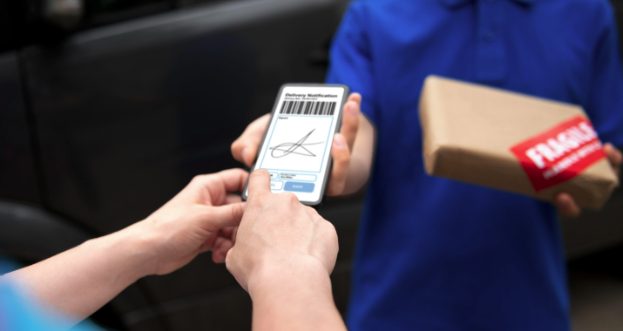
Proof of delivery, or POD meaning in courier, is a record that confirms a package has reached the right recipient. In courier operations, POD can be a signature, OTP confirmation, delivery timestamp or a photo at handover.
For D2C brands handling large volumes, proof of delivery serves as both legal protection and clear confirmation that orders are delivered successfully.
It helps to:
- Confirm that the delivery is complete
- Trigger billing and payments
- Reduce customer disputes
- Support accurate COD reconciliation and faster settlements

Why Proof of Delivery Is Critical for Growing E-Commerce Brands
For high-volume D2C brands, proof of delivery protects revenue, ensures smooth cash flow, resolves disputes faster, reduces RTO and speeds up payment reconciliation, going beyond simple delivery confirmation.
Here are some proof of delivery benefits:
Reduces Delivery Disputes and False Claims
In the absence of timely POD, brands face higher exposure to:
- Customer claims of non-receipt
- Chargebacks in prepaid transactions
- COD refusal disputes at the doorstep
Protects Cash Flow
Accurate POD plays a critical role in revenue realisation. It enables:
- Faster COD confirmation and settlement processing
- Structured reconciliation across high order volumes
- Reduced working capital blocked in pending deliveries
Improves Operational Transparency
Structured POD systems strengthen backend visibility by creating:
- A clear audit trail for every shipment
- Real-time data access for operations teams
- Courier performance monitoring across zones
Types of Proof of Delivery
Knowing the types of proof of delivery helps e-commerce brands pick systems that balance speed, dispute protection and smooth operations, with digital POD offering better tracking, clear records and faster payments.

Physical Signature POD
- Traditional paper-based recipient signature
- Manual documentation and upload
- Slower reconciliation cycles
- Higher risk of misplaced records and disputes
Electronic ePOD
- Digital signature capture on handheld devices
- Timestamp and GPS tracking
- Instant system updates
- Strong audit trail and faster dispute resolution
Photo-Based POD
- Delivery image captured at the doorstep
- Useful for contactless and unattended deliveries
- Visual confirmation reduces \"item not received\" claims
OTP-Based POD
- One-time password shared with the recipient
- Common in COD shipments
- Adds identity verification layer before handover
Comparison Table: Types of Proof of Delivery
| Type | Speed of Update | Dispute Protection | Operational Efficiency |
|---|---|---|---|
| Physical Signature POD | Slow (manual upload) | Moderate | Low |
| Electronic POD (ePOD) | Real-time / Instant | High | High |
| Photo-Based POD | Fast | High (visual evidence) | Moderate to High |
| OTP-Based POD | Instant verification | High (identity validation) | High |
How Proof of Delivery Impacts RTO and Delivery Performance
For growing D2C brands, proof of delivery directly impacts RTO rates, courier accountability and working capital. Delayed or missing POD slows NDR checks, causes communication gaps and leads to avoidable RTOs and extra shipping costs.
Accurate, time-stamped POD speeds dispute resolution, verifies refusals, enables quicker reattempts and centralised data improves first-attempt delivery success while reducing disputes.
Common Challenges With POD in Logistics
Despite its importance, POD in logistics often faces operational gaps that affect efficiency, reconciliation speed and cash flow stability. Common challenges include:
- Manual paperwork slows down delivery confirmation and delays COD payouts.
- Different data formats across courier partners create tracking gaps and billing disputes.
- Longer dispute resolution cycles block working capital and impact customer experience.
- Lack of real-time visibility delays NDR action, increases avoidable RTOs and adds extra administrative effort.
How ShipPrime Strengthens Proof of Delivery and Operational Control
ShipPrime strengthens proof of delivery while aligning with core growth pillars for scaling D2C brands.
- Lower Shipping Costs & Stronger Cash Flow: No wallet recharge keeps working capital free; daily COD remittance (D+3), including Sundays, gives faster access to funds.
- RTO Reduction & Better Delivery Performance: Proactive NDR calling cuts RTO by up to 10%; Auto NDR tools improve delivery success.
- Operational Transparency & Simplicity: Zero weight disputes and a centralised dashboard provide clear billing and full shipment visibility.
- Human Support + Smart Automation: WhatsApp KAM support and automated reconciliation reduce manual effort.
- Built for Scale: Multi-store management and flexible onboarding support growing brands.
Conclusion
Proof of delivery goes beyond confirming delivery; it safeguards revenue, reduces disputes and improves cash flow predictability. A structured POD process enhances operational clarity, speeds COD reconciliation and cuts avoidable RTO losses.
For growing D2C brands, a strong POD system is essential for smooth scaling. Combined with transparent billing, automation and proactive delivery management, POD becomes a growth driver, not just the final step in logistics.
FAQs
Is proof of delivery legally valid in India?
Yes. Electronic records, digital signatures and system-generated timestamps are admissible under Indian law when securely stored and traceable.
How long should brands retain POD records?
Generally 6-8 years to align with accounting, tax and dispute timelines, including chargeback windows.
Does POD affect chargeback disputes for prepaid orders?
Yes. Verified POD strengthens representment cases with payment gateways and reduces reversal risk.
Can inaccurate POD data increase courier billing disputes?
Yes. Incomplete or inconsistent POD records can complicate weight disputes and failed delivery claims.
Is OTP-based POD reliable for high-value shipments?
It is reliable when supported by strong verification protocols, geo-tagging and proper audit logs.
Ready to reduce your shipping costs?
Join thousands of D2C brands shipping smarter with ShipPrime — rates from ₹19/500g, D+2 COD remittance, and 15+ courier partners across India.
Get Started Free